A Miracle for Breakfast


A Miracle for Breakfast
Elizabeth Bishop

At six o’clock we were waiting for coffee,
waiting for coffee and the charitable crumb
that was going to be served from a certain balcony
—like kings of old, or like a miracle.
It was still dark. One foot of the sun
steadied itself on a long ripple in the river.

The first ferry of the day had just crossed the river.
It was so cold we hoped that the coffee
would be very hot, seeing that the sun
was not going to warm us; and that the crumb
would be a loaf each, buttered, by a miracle.
At seven a man stepped out on the balcony.

He stood for a minute alone on the balcony
looking over our heads toward the river.
A servant handed him the makings of a miracle,
consisting of one lone cup of coffee
and one roll, which he proceeded to crumb,
his head, so to speak, in the clouds—along with the sun.

Was the man crazy? What under the sun
was he trying to do, up there on his balcony!
Each man received one rather hard crumb,
which some flicked scornfully into the river,
and, in a cup, one drop of the coffee.
Some of us stood around, waiting for the miracle.

I can tell what I saw next; it was not a miracle.
A beautiful villa stood in the sun
and from its doors came the smell of hot coffee.
In front, a baroque white plaster balcony
added by birds, who nest along the river,
—I saw it with one eye close to the crumb—

and galleries and marble chambers. My crumb
my mansion, made for me by a miracle,
through ages, by insects, birds, and the river
working the stone. Every day, in the sun,
at breakfast time I sit on my balcony
with my feet up, and drink gallons of coffee.

We licked up the crumb and swallowed the coffee.
A window across the river caught the sun
as if the miracle were working, on the wrong balcony.

From Elizabeth Bishop: The Complete Poems 1927-1979. New York: Noonday Press,

Here's a video reading and interpretation of the poem by Michael Joyce, a Professor of English. I find it funny when he mentions a "Marxist" interpretation at one point- It reminds me of the Brazilian theologian Dom Helder Camara's famous quote on poverty and social injustice  "When I give food to the poor, they call me a saint. When I ask why they are poor, they call me a communist." It's just good old Catholic social doctrine ! 

 For me, it is a sacramental poem. It reminds me of the Lord's Prayer: Give Us This Day our Daily Bread, the parable of the feeding of the five thousand, the miracle of the Eucharist, gifts of the Holy Spirit, gratitude and appreciation for the beauty of small and the simple graces of unmerited divine blessing.  

The poem shows that appreciation and benevolence are divine gifts that we receive in order to bless others. What is true of all fruits and gifts of the Spirit, is that the more we are able to show and freely share them indiscriminately with others, we are restored with even more grace and blessing. ( I wish that the latter was always true in this life but in reality life often has a way of making me question that ! )


 This one is an extra throw in  
prompted by an unexpected gift of a stray bee in my kitchen.

Virgil's Bees
Carol Ann Duffy

Bless air's gift of sweetness, honey
from the bees, inspired by clover,
marigold, eucalyptus, thyme,
the hundred perfumes of the wind.

Bless the beekeeper
who chooses for her hives
a site near water, violet beds, no yew,
no echo. Let the light lilt, leak, green
or gold, pigment for queens,
and joy be inexplicable but there
in harmony of willowherb and stream,
of summer heat and breeze,
each bee's body
at its brilliant flower, lover-stunned,
strumming on fragrance, smitten.

For this,
let gardens grow, where beelines end,
sighing in roses, saffron blooms, buddleia;
where bees pray on their knees, sing, praise
in pear trees, plum trees; 
bees are the batteries of orchards, gardens, guard them.

In the bible the manna from heaven that rained down on the Jews as they passed through the desert is thought to have been honeydew from a type of scale insect commonly found on tamarisk. 
 
To make a one pound jar of honey honeybees must visit and suck nectar from about 3 000 000 flowers of red clover or 2 000 000 flowers of vetch. Think of all that work next time you spread it on your toast! 

I have profound respect for these creatures that are so critical to our own well being on this earth.
 "Let us be grateful for those who give us happiness; they are the charming gardeners who make our souls bloom." ~ Marcel Proust
Enhanced by Zemanta

Brother Mickey McGrath video

Brother Mickey McGrath's wonderful art work has featured several times on this blog.
So it's a pleasure to show this recent video report of him talking about his work..


Other posts from my archive featuring his work are here
and here and here 
and here 
and here.
 

Pentecost to Ordinary Time Poems


We are back in liturgical "Ordinary Time", but I have always found that transition strange - a hybrid time, so that's reflected in the mixture here..
      
Click here for a Pentecost Poem from 2010  titled Ignis Spiritus Paracliti by St. Hildegard of Bingen.

"I am Wisdom. Mine is the blast of the resounding Word through which all creation came to be, and I quickened all things with my breath so that not one of them is mortal in its kind; for I am Life. 

Indeed I am Life, whole and undivided — not hewn from any stone, or budded from branches, or rooted in virile strength; but all that lives has its root in Me. 

For Wisdom is the root whose blossom is the resounding Word….


I flame above the beauty of the fields to signify the earth — the matter from which humanity was made. 
I shine in the waters to indicate the soul, for, as water suffuses the whole earth, the soul pervades the whole body. 

I burn in the sun and the moon to denote Wisdom, and the stars are the innumerable words of Wisdom."

 The tragedy of life is not death, but what we let die inside of us while we live.
by N. Cousins

 
A Blessing for One Who is Exhausted
 by John O'Donohue

When the rhythm of the heart becomes hectic,
 Time takes on the strain until it breaks;
 Then all the unattended stress falls in on the mind
 like an endless, increasing weight, 
 the light in the mind becomes dim.

 Things you could take in your stride before
 Now become laboursome events of will.
 Weariness invades your spirit.
 Gravity begins falling inside you, 
Dragging down every bone. 

 The tide you never valued has gone out. 
And you are marooned on unsure ground. 
Something within you has closed down; 
And you cannot push yourself back to life.
 You have been forced to enter empty time. 

The desire that drove you has relinquished. 
There is nothing else to do now but rest
 And patiently learn to receive the self 
You have forsaken for the race of days.

 At first your thinking will darken 
And sadness take over like listless weather. 
The flow of unwept tears will frighten you.
 You have travelled too fast over false ground; 

Now your soul has come to take you back.
Take refuge in your senses, 
Open up To all the small miracles you rushed through. 

 Become inclined to watch the way of rain 
When it falls slow and free.
 Imitate the habit of twilight, 
Taking time to open the well of colour
 That fostered the brightness of day.

 Draw alongside the silence of stone
 Until its calmness can claim you. 
Be excessively gentle with yourself. 
 Stay clear of those vexed in spirit.

 Learn to linger around someone of ease
 Who feels they have all the time in the world.
 Gradually, you will return to yourself, 
Having learned a new respect for your heart
 And the joy that dwells far within slow time.


And yet, Though We Strain
 ~ Rainer Maria Rilke ~

And yet though we strain
against the deadening grip
of daily necessity,
I sense there is this mystery:

All life is being lived.

Who is living it then?
Is it the things themselves,
or something waiting inside them,
like an unplayed melody in a flute?

Is it the winds blowing over the waters?
Is it the branches that signal to each other?

Is it flowers
interweaving their fragrances
or streets, as they wind through time?

Prayers for Oklahoma

For all those affected by the horrific tornados and storms in Oklahoma.

Prayer from Fr. Austin Fleming here.

 Prayer below from The Episcopal Church FB page.

 "O God of all creation, you stand as mysteriously behind the forces of nature as you are revealed in the frailty of humankind; accept our prayers for all those who suffer from the ferocity of the winds and the battering of the rains. May you restore all those who are lost to those who love them, give to those who mourn a sure confidence in your abiding love, and fill all of with strength to meet the days ahead with faith, hope, and love, for it is in such that we meet you and act on your compassionate behalf. Amen."

Solemnity of The Holy Trinity 2013

The Trinity by Gregory Radionov
A modern take on the Rublev Icon ?
Scripture readings for Sunday's Mass are here.
My reflections and attempts to get a grip on the Holy Trinity from previous years are below.


Another 2010 post from Trinity Sunday 2010 : A Preacher's Nightmare.


and another one from 2011 : "This Holy Trinity Thingymabob."


This 2012 post features Bruce Cockburn's beautiful song, "Child Of The Wind." and a link to a lovely poem by Joann Nelander, titled "My Holy Three."

Jürgen Moltmann, a prominent theological writer of the twenty first century writes on Rublev’s work:
 
“Through their tenderly intimate inclination towards one another, the three persons show the profound unity joining them, in which they are one.
 The chalice on the table points to the surrender of the Son on Golgotha.

 Just as the chalice stands at the centre of the table round which the three Persons are sitting, so the cross of the Son stands from eternity into the centre of the Trinity.” 

Icon of the Holy Trinity, by Andrei Rublev
Icon of the Holy Trinity, by Andrei Rublev (Photo credit: Wikipedia)

Click here for an interesting post on the symbolism of Andrei Rublev's Icon of the Trinity, painted around 1410 and click here for another less interactive site with similar information here.

Oklad The Trinity by Rublev
Source

Praying The Great Dance

Image source and accompanying article here

In this extract from an article titled "Praying The Great Dance" at the excellent site Gratefulness .org, Benedictine Brother David Steindl Rast distinguishes formal from informal prayer and identifies three attitudes of praying informally.

 "Informal prayerfulness is the rich, black humus in which formal prayers 
  grow. We cannot separate (formal) prayers from (informal) prayer. 

We must, however, distinguish between the two and focus for a moment on prayer as an inner attitude rather than an external form of praying. 

When I do this, I find myself gliding in and out of three attitudes of praying so different from one another that I think of them as altogether different worlds of prayer.

The First Inner World - Word


My key to the first of those inner worlds I call Word. By this I don’t mean any particular word or words but rather the discovery that any thing, any person, any situation is a word addressed to me by God. 

Not that I always catch onto the message, but I know I will get it if I listen deeply with the ears of my heart. St. Benedict calls this deep, willing listening “obedience.” We often think of obedience as compliance with a command. But this would make God some sort of exalted drill sergeant. In my experience, most of the time, God doesn’t command. Rather, God sings; and I sing back.

The singing I mean can be as jubilant as the red of God-made tomatoes; as a soaring of a kite or the splashing of children in a pool and my heart’s joyous response to this. 
But God’s singing can also be as heavy as the fragrance of lilies in a funeral home, heavy as the news of a friend’s grief; light as harpsichord music or a spring outing; sad as the howling of a night train, sad as the evening news; it can be cheerful, enchanting, challenging, amusing. In everything we experience we can hear God singing, if we listen attentively.

Our heart is a highly sensitive receiver; it can listen through all our senses. Whatever we hear, but also whatever we see, taste, touch, or smell, vibrates deep down with God’s song. To resonate with this song in gratefulness is what I call singing back. This attitude of prayer has given great joy to all my senses and to my heart.

The Second Inner World - Silence

A completely different inner world of prayer where I also feel at home is one to which silence opens the door – silence, not only as perceived by the ears, but also a quietness of the heart, a lucid stillness inside, like the stillness of a windless midwinter day; brilliant with sunlight on virgin snow, the kind of day I remember from my childhood in the Austrian Alps. 

Or it’s like the silence between a lightning flash and the thunder crash that follows, the moment in which you hold your breath. 
 
Image source

On an island in Maine I once found tidal pools on the granite shore with water so still and clear I could see the fine fibrils of sea anemones on the bottom, waving like festive streamers.  Still more limpid is the inner space to which silence is the key.  I don’t always find that key, but when I do, I simply enter. Just to be there is prayer.

The Third Inner World- Loving Action

To a third inner world, action is the key, loving action. There surely is a world of difference between the prayer of action and that of silence or word.  Here it is not by listening and responding, not by diving down into silence, but by acting, by doing that I communicate with God. Whatever I can do lovingly can become prayer of action.

Nor is it necessary that I explicitly think of God while working or playing. Sometimes this would hardly be possible. While proofreading a manuscript, I better keep my mind on the text, not on God. If my mind is torn between the two, the typos will slip through like little fish through a torn net. God will be present precisely in the loving attention I give to the work entrusted to me. By giving myself fully and lovingly to that work, I give myself fully to God.  This happens not only in work but also in play, say, in bird-watching or in watching a good movie. 

God must be enjoying it in me, when I am enjoying it in God. Is not this communion the essence of praying?  One of the gifts in my life for which I am most grateful is the way I was taught about the Blessed Trinity. 

Others have told me that, early on, they got the message that God’s Trinity is a mystery we could never fathom, so they draw the conclusion, why bother? When I was told of this mystery, it was always in a tone that invited me to explore it – the task not of a lifetime only but of eternal life, life beyond time. My life of prayer has been just this exploration, and it continues to be so. In fact, in my seventies, I feel I’ve barely begun.


My highest goal in prayer is to enter into that dance through everything I do or think or suffer or say.


As far back as I can remember, I had learned to think of God not as far away but as nearer than near. I must have been four or five when I came racing from the garden into the kitchen, all out of breath, announcing that I had just seen the Holy Spirit writing something up in heaven. I turned out to have been an advertisement for soap powder, written by a plane so high up in the sky that it looked just like the white dove in the fresco of the Blessed Trinity painted on our church ceiling.

 About that same time, shortly before Christmas, when Austrian children wait not for Santa but for the Christ Child to bring them presents, I spied one morning a tiny thread of gold lame on the carpet, and nothing could have convinced me that this was not a golden hair the Christ Child had lost. The chills of awe I felt and the thrill of tender affection are still vivid in my memory.

These childish misapprehensions were nevertheless genuine religious experiences. What was essential to them remains: a sense of God’s nearness.

Not only did it remain, it kept growing wider and deeper. Nearness is too weak a word. From a sermon by our Dominican student chaplain, Father Diego, I soared, ecstatic in the realization that we can know God as triune precisely because we are drawn into the eternal dance of Father, Son, and Holy Spirit. 

For students in Vienna it is not frivolous to speak of God as dancing. Dancing is serious – not dead-serious, of course, but life-serious. Much later, I learned the Shaker hymn about Christ as “Lord of the Dance.”

Perichoresis. Praying The Great Dance


I also learned that St. Gregory of Nyssa, way back in the fourth century, had spoken of the Circle Dance of the Blessed Trinity; the eternal Son comes forth from the Father and leads us with all of creation in the Holy Spirit back to the Father.

We can speak of this Great Dance also in terms of Word, Silence, and Action:  The Logos, the Word of God, comes forth from God’s unfathomable silence and returns to God, heavy with harvest in the Spirit that inspires loving action. 

This trinitarian perspective helps me understand in ever new ways the “communication with God” that we call prayers – not as a sort of heavenly long-distance call but as the gift of coming ever more alive by sharing in God’s life.

Here I come back once more to formal prayer, to the doxology that traditionally concludes the prayers we begin “in the name of the Father and of the Son and of the Holy Spirit.” In the concluding doxology, too, we usually connect Father, Son and Spirit by and.  

But I prefer a more ancient version. This more dynamic version suggests our entering into God’s life as we pray to the Father (Mother and Source of all), through the Son (through whom we have communion with God), in the Holy Spirit (that Force which comes from God, is God, and leads all things back to the Source in a great dance).

My highest goal in prayer is to enter into that dance through everything I do or think or suffer or say. 

For that end-without-end I long, whenever I pray: “Glory be to the Father, through the Son, in the Holy Spirit, as it was in the beginning, is now and ever shall be, world without end. Amen.”

From The Best Spiritual Writing 1998, edited by Philip Zaleski.
(Dimensions,  Harper San Francisco, 1998) 


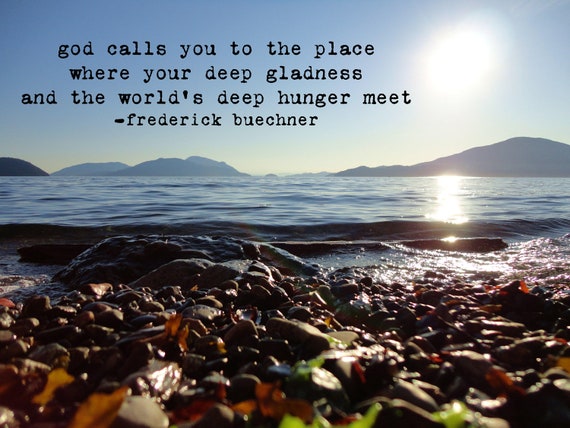
As we approach Trinity Sunday, this prayer from Frederick Buechner hits the mark.

"Come unto me. Come unto me, you say. All right then, dear my Lord. I will try in my own absurd way...For who am I? I know only that heel and toe, memory and metatarsal, I am everything that turns, all of a piece, unthinking, at the sound of my name. I am where my feet take me. Come unto me, you say. I, all of me, unknowing and finally unknowable even to myself, turn. 

 O Lord and lover, I come if I can to you down through the litter of any day, through sleeping and waking and eating and saying goodbye and going away and coming back again. Laboring and laden with endless histories heavy on my back."

-Frederick Buechner, The Alphabet of Grace, 28-29.


This beautiful song by Christopher Grundy gives expression to the rhythmic tidal nature of the pull and push of prayer life, lulling softly against the soundscape of the ocean in the background.
The cyclic nature and the ebb and flow of life remind me of the creative trinitarian power of life, the perichoresis of our life, the Alpha and the Omega of our existence, at the beginning and the end of all our days.


As the moon pulls the ocean
 so my soul is drawn to you
Pull me closer as you circle
I will fall and rise with you
and rise with you

As the tide rocks the beaches
Lifting sand as it rolls through
Lift us up into your dancing
We will rise and dance with you
And dance with you

As the sand shapes the shoreline
Sculpting all the lands anew
We will shape the world you're dreaming
Dancing with the rising moon
The rising moon
The rising moon
The rising moon
The rising moon